
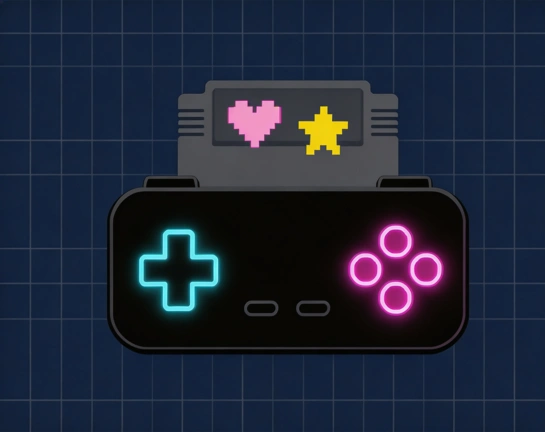
Discover the best retro games that defined generations—explore classic consoles, emulation, hidden gems, and essential picks for 2026, from Super Mario to Chrono Trigger.
关联游戏
Subway Surfers→Retro Games: Why Classic Gaming Still Rules in 2026
There’s a special kind of magic in booting up a game that’s older than you are. The chiptune music kicks in, the pixelated hero appears on screen, and suddenly you’re transported back to a simpler time—when games were about pure challenge, tight controls, and unforgettable characters. That’s the power of retro games. They’re not just relics of the past; they’re timeless experiences that continue to inspire and entertain players of all ages.
In this guide, we’ll explore what makes retro gaming so enduring, break down the classic platforms and genres, share the best retro games to play in 2026, and give you practical advice on how to start your own retro collection. Whether you’re a grizzled veteran reliving your childhood or a curious newcomer discovering the classics for the first time, this is your portal to gaming’s golden age.
What Are Retro Games?
Retro games generally refer to video games and consoles from previous generations—typically anything from the early arcade era through the late 1990s and early 2000s. The exact definition varies, but most people consider the 8-bit and 16-bit eras (roughly 1985–1996) as the heart of retro gaming. These are the games that built the industry: Super Mario Bros., The Legend of Zelda, Sonic the Hedgehog, Street Fighter II, and countless others.
But retro gaming is more than just old software. It’s a culture, a community, and a mindset. It’s about appreciating the constraints that developers faced—limited memory, simple controls, low resolution—and marveling at how they turned those limitations into art. It’s about the joy of picking up a controller and playing a game that doesn’t need a tutorial, a patch, or a season pass. It’s pure, unfiltered fun.
A Brief History: The Eras That Defined Retro Gaming
Retro games span several distinct eras, each with its own identity.
The Arcade Era (Late 1970s–1980s)
Before home consoles dominated, arcades were the place to play. Pac-Man, Space Invaders, Donkey Kong, and Galaga defined this period. These games were designed to be simple to learn, hard to master, and just challenging enough to keep you feeding quarters. The competitive spirit of the arcade scene still influences game design today.
The 8-Bit Era (1983–1990)
The Nintendo Entertainment System (NES) brought arcade-quality gaming into living rooms. Super Mario Bros., The Legend of Zelda, Metroid, and Mega Man set the standard for classic video games. Meanwhile, the Sega Master System offered an alternative with games like Alex Kidd and Phantasy Star. This era established many of the genres we still love: platformers, action-adventures, and RPGs.
The 16-Bit Era (1990–1996)
The Super Nintendo and Sega Genesis escalated the console wars. Games became more colorful, more complex, and more ambitious. Super Mario World, The Legend of Zelda: A Link to the Past, Sonic the Hedgehog 2, Street Fighter II, and Chrono Trigger are just a few of the masterpieces from this period. The 16-bit era is often considered the pinnacle of retro games, combining polished gameplay with artistic pixel graphics.
The 32/64-Bit Era (1996–2001)
The Sony PlayStation and Nintendo 64 brought 3D graphics and CD-quality audio, but many games from this period are now considered retro too. Super Mario 64, Final Fantasy VII, Metal Gear Solid, and Crash Bandicoot pushed the boundaries of what games could be. While the graphics show their age, the gameplay remains timeless.
Why Retro Games Are Still So Addictive
Why do we keep going back to games that are decades old? The appeal of retro gaming runs deep.
1. Pure Gameplay Focus
Retro games couldn’t rely on cinematic cutscenes or photorealistic graphics, so they had to nail the gameplay. The result is a library of titles with tight controls, clever level design, and instant pick-up-and-play appeal. There’s no fluff—just pure, distilled fun.
2. Nostalgia and Emotional Connection
For many players, retro games are tied to cherished memories: playing with siblings, visiting the arcade, unwrapping a console on Christmas morning. Replaying these games triggers positive emotions and a comforting sense of familiarity.
3. The Challenge
Modern games often hold your hand with tutorials and checkpoints. Retro games are gloriously unforgiving. You have three lives, no saves, and a game over screen that sends you back to the beginning. That difficulty is part of the appeal—it makes victory feel earned.
4. Timeless Art Styles
Pixel art ages gracefully. The best retro games have visual styles that are as charming today as they were thirty years ago. The limited palettes and chunky sprites have become an aesthetic of their own, inspiring modern indie developers.
5. Accessibility and Preservation
Thanks to emulation, digital storefronts, and mini consoles, retro games are more accessible than ever. You can play the classics on your phone, PC, or a plug-and-play mini console without hunting down rare cartridges. The preservation community keeps these games alive for future generations.
The Main Platforms for Retro Gaming
To experience retro games, you need to know where to find them. Here are the most common ways to play.
Original Hardware
For purists, nothing beats playing on the original console with a CRT television. Original hardware like the NES, SNES, Sega Genesis, and PlayStation can be found on the second-hand market, though prices have risen in recent years. You’ll need to deal with aging capacitors, region locks, and the difficulty of connecting old consoles to modern TVs.
Mini Classic Consoles
Nintendo’s NES Classic and SNES Classic, Sega’s Genesis Mini, and Sony’s PlayStation Classic are official plug-and-play devices pre-loaded with a selection of games. They’re convenient, affordable, and come with modern features like save states and HDMI output. This is the easiest way to start retro gaming without any technical hassle.
Emulation
Emulators are software programs that mimic the hardware of old consoles, allowing you to play ROMs (digital copies of games) on your PC, phone, or handheld device. Emulation is legal in many contexts if you own the original game, but downloading ROMs of games you don’t own is legally gray. Emulators like RetroArch, Dolphin, and PCSX2 offer incredible features: upscaling, save states, cheat codes, and online play.
Modern Re-releases and Collections
Many classic games have been re-released on modern platforms. The Nintendo Switch Online service includes a growing library of NES, SNES, and Game Boy games. Sega’s Genesis Classics collection is available on Steam and consoles. Capcom Arcade Stadium, Contra Anniversary Collection, and Castlevania Anniversary Collection are excellent ways to own official copies of classic video games.
Dedicated Handhelds
Devices like the Analogue Pocket, Miyoo Mini, and Anbernic handhelds are designed specifically for retro emulation. They offer high-quality screens, long battery life, and support for multiple systems. These are perfect for retro gaming on the go.
The Best Retro Games to Play in 2026
Ready to dive into the classics? Here are the essential retro games every player should experience, organized by genre.
Platformers
Super Mario Bros. 3 (NES) – The pinnacle of 8-bit platforming, with creative power-ups, hidden secrets, and level design that still holds up today.
Sonic the Hedgehog 2 (Sega Genesis) – Fast, colorful, and full of attitude, with the iconic spin dash mechanic.
Donkey Kong Country 2: Diddy's Kong Quest (SNES) – Gorgeous pre-rendered graphics and tight, challenging level design.
Action-Adventure
The Legend of Zelda: A Link to the Past (SNES) – The template for nearly every action-adventure game that followed, with a perfect blend of exploration, puzzles, and combat.
Metroid (NES) – The origin of the Metroidvania genre, with atmospheric isolation and non-linear exploration.
Castlevania: Symphony of the Night (PS1) – A genre-defining masterpiece that popularized the “Metroidvania” structure.
RPGs
Chrono Trigger (SNES) – Often called the greatest RPG ever made, with a time-traveling story, multiple endings, and an unforgettable soundtrack.
Final Fantasy VI (SNES) – A darker, more character-driven entry in the series with an operatic score and a villain for the ages.
EarthBound (SNES) – A quirky, humorous RPG set in a modern-day world, beloved for its charm and emotional depth.
Fighting Games
Street Fighter II Turbo (SNES/Arcade) – The game that defined competitive fighting games, with tight controls and iconic characters.
Super Smash Bros. (N64) – The party fighting game that started a phenomenon, blending Nintendo characters with chaotic fun.
Shoot 'Em Ups
Gradius III (SNES) – A classic horizontal shoot 'em up with customizable power-ups.
R-Type (Arcade) – Brutal but rewarding, with a unique force pod mechanic.
Puzzle Games
Tetris (Game Boy) – The perfect puzzle game, endlessly replayable and universally beloved.
Dr. Mario (NES) – A charming tile-matching game with a catchy soundtrack.
How to Start Your Retro Gaming Journey
Here’s a practical roadmap for getting into retro games.
Decide Your Platform – Are you a console purist, a PC emulation enthusiast, or a handheld gamer? Start with what you already own. If you have a PC, try RetroArch. If you want simplicity, get a mini console or subscribe to Nintendo Switch Online.
Start with the Essentials – Don’t overwhelm yourself with thousands of ROMs. Pick five to ten essential games that define the era, like Super Mario Bros. 3, Sonic 2, A Link to the Past, Chrono Trigger, and Street Fighter II. Master these before expanding.
Learn the History – Understanding the context of these games makes them more enjoyable. Read articles, watch documentaries, and listen to podcasts about the golden age of gaming. Knowing why a game was revolutionary deepens your appreciation.
Join the Community – The retro gaming community is welcoming and passionate. Join subreddits like r/retrogaming, participate in speedrunning events, or attend retro gaming conventions. Sharing your experiences with others adds a social dimension to the hobby.
Collect Responsibly – If you decide to collect original hardware and cartridges, set a budget and focus on games you genuinely want to play. Prices can be high, but you don’t need a complete collection to enjoy the hobby.
Try Modern Retro-Inspired Games – The spirit of retro games lives on in modern indie titles. Games like Shovel Knight, Celeste, Stardew Valley, and Hollow Knight draw heavily from classic design while adding modern polish. They’re a great bridge between old and new.
The Future of Retro Games
Retro gaming is not just a nostalgia trip—it’s a living, evolving part of the industry.
Enhanced Re-releases – Companies are increasingly remastering and remaking classic games with quality-of-life improvements while preserving the original gameplay. Metroid Prime Remastered, Resident Evil 4 Remake, and the Final Fantasy Pixel Remaster series are recent examples.
FPGA Hardware – FPGA-based consoles like the Analogue Pocket and MiSTer recreate original hardware at the chip level, offering cycle-accurate emulation without the lag of software emulators. This is the gold standard for purists.
Digital Preservation – As physical media deteriorates, preservation efforts are more important than ever. Libraries, archives, and community projects are working to ensure that classic video games are not lost to time.
Cross-Generational Appeal – Younger players are discovering retro games through YouTube, Twitch, and streaming services. The simplicity and challenge of these games have a universal appeal that transcends age.
Indie Revival – The modern indie scene is heavily influenced by retro aesthetics and design. Pixel art games, chiptune soundtracks, and tight, focused gameplay are more popular than ever, proving that the spirit of retro gaming is alive and well.
Final Thoughts: Press Start
Retro games are a gift that keeps on giving. They’re a window into gaming’s past, a testament to the creativity of developers who did more with less, and a reminder that great gameplay never goes out of style. Whether you’re blowing into a cartridge (don’t actually do that), loading a ROM on your phone, or playing a mini console on your TV, the classics are waiting for you.
So pick a game from our list, press start, and discover why retro gaming is more than nostalgia—it’s timeless.
相关推荐

最新文章
Tower Defense Games: The Ultimate Strategy Guide & Best Picks for 2026
2026年9月1日
Platformer Games: The Ultimate Guide to Jumping, Running & Mastering Precision – 2026
2026年9月1日
Sandbox Games: The Ultimate Guide to Unlimited Creativity & Best Picks 2026
2026年8月30日
Racing Games: The Ultimate Guide to Speed, Skill & Best Picks 2026
2026年8月30日
Zombie Games: The Ultimate Guide to Survival Horror & Best Picks 2026
2026年8月28日