
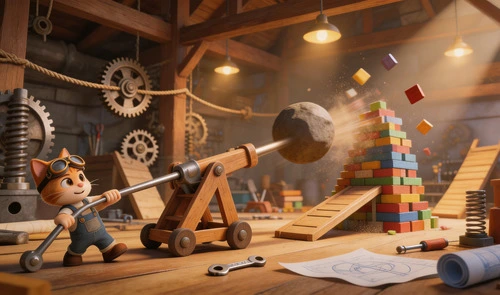
Discover the best sandbox games that unleash your creativity—explore types, core mechanics, creative tips, and top picks for 2026, from Minecraft to Garry's Mod.
Related game
Potato Survivors→Sandbox Games: The Joy of Unlimited Creation and Freedom
There’s a special kind of magic in loading up a sandbox game and realizing that no one is telling you what to do. No quest markers, no time limits, no “wrong” way to play. Just you, a world full of possibilities, and the freedom to build, explore, or destroy as you see fit. That’s the essence of sandbox games—a genre that treats players not as passive consumers, but as active creators of their own experience.
In this guide, we’ll explore what makes sandbox games so liberating, break down the core mechanics, share the best sandbox games to play in 2026, and give you practical tips to make the most of your creative freedom. Whether you’re a seasoned builder or a curious newcomer, this is your invitation to play without limits.
What Are Sandbox Games?
Sandbox games are a genre defined by freedom. Unlike linear games that guide you through a set sequence of levels or objectives, sandbox games drop you into a world and say: “Here are the tools. Do what you want.” The name comes from the childhood sandbox—a contained space where you can build castles, dig holes, or just let your imagination run wild.
The key features of sandbox games include:
Open-ended gameplay: There’s no single “correct” way to play. You set your own goals.
Creative tools: Building, crafting, terraforming, or modding systems let you shape the world.
Emergent gameplay: Unplanned, often surprising situations arise from the interaction of systems.
Player agency: Your choices drive the experience, not a predetermined script.
Some sandbox games, like Minecraft, focus on building and survival. Others, like Garry's Mod, are pure physics playgrounds. Still others, like The Legend of Zelda: Tears of the Kingdom, blend sandbox elements with a structured story. The common thread is freedom—the sense that you are in control.
A Brief History: From Simulation to Infinite Worlds
The roots of sandbox games stretch back to early simulation and city-building titles. SimCity (1989) let players design and manage their own cities without a fixed end goal. The Sims (2000) expanded the concept to everyday life, giving players god-like control over virtual people. These games established the core idea that play could be self-directed.
The true explosion came with Minecraft (2011). Its procedurally generated, fully destructible world combined survival, crafting, and infinite creativity. It became a global phenomenon, proving that a game without a story or fixed objectives could captivate millions. Around the same time, Garry's Mod (2006) turned the physics engine of Half-Life 2 into a sandbox playground where players spawned objects, built contraptions, and created their own games within the game.
Today, sandbox games encompass a vast spectrum: from space exploration epics like No Man's Sky to chaotic multiplayer physics sandboxes like Besiege and TerraTech. The genre continues to push the boundaries of what games can be.
Why Sandbox Games Are So Addictive
What keeps us building, exploring, and experimenting for hundreds of hours? The psychology of sandbox games is deeply rooted in human nature.
1. Intrinsic Motivation
In most games, rewards come from the game—loot, achievements, progression. In sandbox games, the reward is the activity itself. You build a castle because building a castle is fun, not because the game promises a prize. This intrinsic motivation is incredibly powerful and sustaining.
2. The Joy of Creation
Humans are natural makers. Sandbox games tap into our deep-seated urge to create, shape, and leave our mark on the world. Whether you’re designing a redstone contraption in Minecraft or assembling a ridiculous vehicle in Besiege, the act of bringing an idea to life is profoundly satisfying.
3. Total Autonomy
Sandbox games give you complete control. You decide what to do, where to go, and how to play. This autonomy satisfies a fundamental psychological need for self-determination. In a world full of rules and obligations, the freedom to do whatever you want—even for an hour—is liberating.
4. Endless Replayability
Because you set your own goals, sandbox games never truly end. You can start a new project, explore a new biome, or try a completely different playstyle anytime. The replayability is virtually infinite, making them some of the best value-for-money games ever made.
The Main Types of Sandbox Games
The sandbox genre is incredibly diverse. Here are the most popular subcategories, each offering a different flavor of freedom.
Creative Building Sandboxes
These games are all about construction. Minecraft is the undisputed king, but others like Dragon Quest Builders and Trove offer their own takes on block-based creativity. The focus is on gathering resources and building anything you can imagine.
Physics Sandboxes
Here, the fun comes from manipulating objects and watching the physics engine do its thing. Garry's Mod, Besiege, and People Playground let you spawn objects, build machines, and cause glorious chaos. These games are often hilarious and endlessly experimental.
Open World Exploration Sandboxes
Games like No Man's Sky, Subnautica, and Elite Dangerous drop you into vast, seamless universes and let you explore at your own pace. There may be survival elements or loose objectives, but the core appeal is the freedom to go anywhere and discover what’s out there.
Survival Sandboxes
Rust, ARK: Survival Evolved, and Valheim combine sandbox freedom with survival mechanics. You gather resources, build shelters, and fend off threats while shaping the world around you. The challenge adds tension to the creative freedom.
City and Life Simulation Sandboxes
Cities: Skylines, The Sims 4, and Planet Zoo let you design and manage complex systems—cities, households, or ecosystems. The sandbox element is in the endless customization and the stories that emerge from your choices.
Game-Making Sandboxes
Titles like Roblox, Dreams, and Core blur the line between playing and creating. They provide tools for players to build their own games, levels, and experiences, then share them with a global community. These are the ultimate expression of sandbox creativity.
The Best Sandbox Games to Play in 2026
Ready to set your own goals and create something amazing? Here are the top sandbox games you should try right now.
1. Minecraft – The Eternal King of Sandbox Games
No list of sandbox games would be complete without Minecraft. Over a decade after its release, it remains the best-selling video game of all time for a reason. The core loop of mining, crafting, and building is endlessly satisfying, and the creative mode removes all constraints, giving you unlimited blocks to build whatever you can dream. The modding community extends the experience even further, adding new dimensions, mechanics, and adventures. It’s the definitive creative sandbox game.
2. Garry's Mod – The Ultimate Physics Playground
Garry's Mod is less a game and more a universe of possibilities. Built on the Source engine, it lets you spawn objects, weld them together, create contraptions, and play countless community-made game modes. From building a working car to staging a zombie apocalypse, the only limit is your imagination. It’s the purest expression of sandbox game mechanics—tool-driven, player-directed, and endlessly hilarious.
3. Terraria – The 2D Sandbox Adventure
Often described as “2D Minecraft,” Terraria is so much more. It combines sandbox building with deep exploration, boss fights, and RPG-style progression. You dig, build, craft weapons, and battle increasingly challenging enemies—all in a charming pixel-art world. The freedom to shape the world and the thrill of discovery make it one of the best open world sandbox experiences in 2D.
4. No Man's Sky – The Infinite Space Sandbox
No Man's Sky has evolved from a controversial launch into one of the most impressive sandbox games ever made. You explore a procedurally generated universe with billions of planets, each with unique flora, fauna, and resources. You can build bases, own a fleet, engage in space combat, or simply wander and catalogue alien worlds. The sense of infinite freedom is unmatched.
5. Besiege – Build, Destroy, Repeat
This physics-based sandbox game challenges you to build medieval siege engines—catapults, battering rams, flying machines—to destroy castles and complete objectives. The building system is deep and flexible, and the destruction physics are gloriously satisfying. The addition of a level editor and Steam Workshop support means you can build and share your own machines with the community.
6. Cities: Skylines II – The Modern City Sandbox
If you love urban planning and management, Cities: Skylines II is the ultimate sandbox game. You design every aspect of a city: roads, zoning, public transit, utilities, and more. The level of detail is staggering, and the sandbox mode lets you build without budget constraints. It’s a meditative, deeply engaging creative experience.
7. Valheim – The Viking Survival Sandbox
This indie sensation blends sandbox survival games with Norse mythology. You explore a beautiful procedurally generated world, gather resources, build longhouses and fortresses, and battle mythical creatures. The building system is intuitive and rewarding, and the cooperative multiplayer lets you build a Viking village with friends.
8. Roblox – The Infinite Game-Making Platform
Roblox is less a game than a platform where millions of players create and share their own games. The tools are accessible enough for beginners but powerful enough for experienced developers. Whether you want to play obstacle courses, role-play servers, or build your own empire, Roblox offers a sandbox game ecosystem unlike anything else.
Pro Tips to Master Sandbox Games
Here’s how to get the most out of your sandbox game experience.
Set Your Own Goals – The lack of objectives can feel overwhelming at first. Give yourself a project: build a castle, reach a distant planet, design a working roller coaster. Having a self-imposed goal focuses your play and makes success satisfying.
Start Small, Then Scale Up – Don’t try to build a massive city or a complex machine on day one. Begin with small projects to learn the tools and systems. As you gain confidence, expand your ambitions.
Learn the Tools Thoroughly – Every sandbox game has its own set of tools—building blocks, wiring systems, terraforming tools, physics objects. Spend time in tutorials or creative modes to learn what’s possible. The more tools you master, the more freedom you truly have.
Embrace Failure and Experimentation – In sandbox games, there’s no “wrong” way to play. If your bridge collapses or your spaceship explodes, that’s part of the fun. Every failure teaches you something about the game’s systems.
Engage with the Community – The best sandbox games have thriving communities sharing builds, mods, and tips. Browse forums, watch tutorials, and download other players’ creations to learn new techniques and get inspired.
Document Your Creations – Take screenshots or record videos of your builds. Sharing your work online—whether on Reddit, YouTube, or Steam Workshop—adds a social dimension and can inspire others.
Don’t Be Afraid to Mod – Many sandbox games support mods that add new content, tools, or quality-of-life improvements. Modding can dramatically extend the life of a game and open up new creative possibilities.
The Future of Sandbox Games
The sandbox genre is evolving in exciting directions:
User-Generated Content Everywhere – The line between player and creator is blurring. Expect more games to offer robust creation tools and integrated sharing, turning every player into a potential designer.
AI-Assisted Creation – AI tools could help players generate terrain, design buildings, or script behaviors with simple prompts, lowering the barrier to creativity and unleashing new forms of expression.
Persistent Online Worlds – Massive shared sandbox worlds, where thousands of players build and explore together, are becoming more feasible. Imagine a Minecraft server with a million concurrent players.
Cross-Platform Creation – Build on PC, continue on mobile, and share with console players. Cross-platform support is becoming standard, making sandbox games more accessible than ever.
Physical Interaction – With VR and haptic feedback, future sandbox games might let you reach out and sculpt the world with your hands, adding a tactile dimension to creation.
Final Thoughts: Build Your Own Adventure
Sandbox games are a celebration of human creativity. They remind us that play is not just about following rules, but about breaking them, bending them, and making them our own. Whether you’re stacking blocks in Minecraft, welding contraptions in Garry's Mod, or designing a city in Cities: Skylines, you’re doing something uniquely human: creating something from nothing.
So pick a game from our list, give yourself a project, and start building. The world is yours.
More like this


Recent articles
Tower Defense Games: The Ultimate Strategy Guide & Best Picks for 2026
Sep 1, 2026
Platformer Games: The Ultimate Guide to Jumping, Running & Mastering Precision – 2026
Sep 1, 2026
Racing Games: The Ultimate Guide to Speed, Skill & Best Picks 2026
Aug 30, 2026
Zombie Games: The Ultimate Guide to Survival Horror & Best Picks 2026
Aug 28, 2026
Retro Games: The Ultimate Guide to Classic Gaming & Best Picks 2026
Aug 28, 2026